
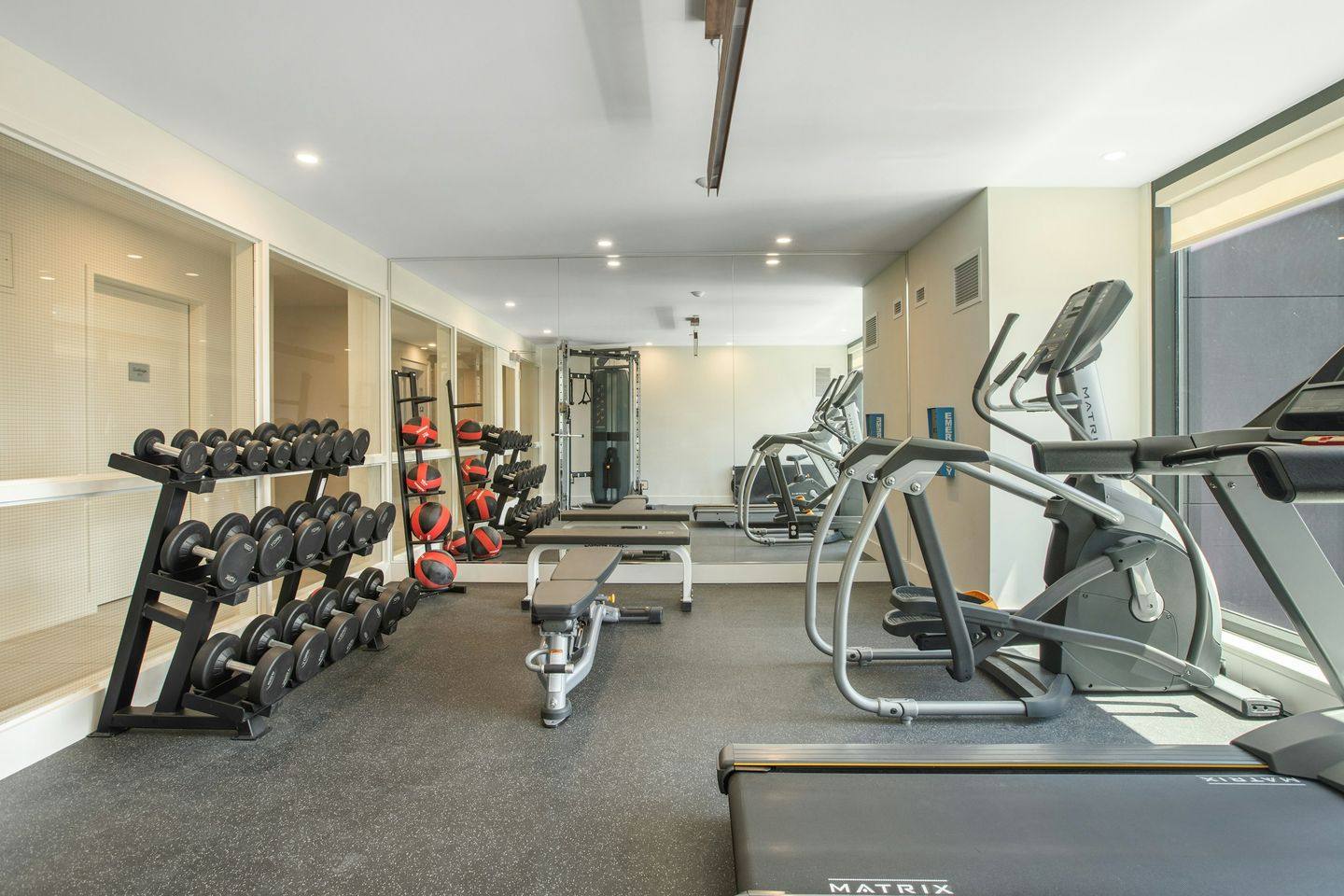
A real home gym needs five things: a power rack with a pull-up bar, a barbell with plates, a bench, a pair of adjustable dumbbells and a rower or bike. Everything else is optional, and most of the equipment in Bloomfield Hills basements is the optional kind.
I have walked into more home gyms in Bloomfield Hills than I can count, and most of them share a problem. They were bought as a room, not as a program. A treadmill facing a television, an elliptical, a Smith machine the dealer recommended, a rack of light dumbbells, a mirror. Thirty thousand dollars of equipment, and no way to do the three movements that actually change a body past forty.
Here is what we specify when we set up a client’s gym, in order of importance.
The five pieces that matter
1. A power rack with a pull-up bar. This is the gym. A rack lets you squat and press safely without a spotter, which is the condition for training alone at 5:45 am. Get one with safety bars, a pull-up bar and plate storage. Eight to nine feet of ceiling height is enough. Budget $1,500 to $4,000 for a good one.
2. A barbell and plates. One quality bar, not two cheap ones. Rubber bumper plates if the floor matters, iron if it does not. A client of ours in Bloomfield Hills needed 300 pounds of plates by the end of his first year; most people need less to start and more than they think later.
3. An adjustable bench. Flat to incline. Used in half of every session for pressing, rows and the single-leg work that keeps hips honest.
4. Adjustable dumbbells. One pair that goes from 5 to 50 or 70 pounds replaces the rack of twenty pairs you were about to buy, and takes up two square feet.
5. A rower or an air bike. Conditioning that is short and hard happens here. Twelve minutes, done. A rower is quieter and kinder to the knees; an air bike is more brutal. Pick one.
What is worth adding later
A cable station for rows and pulldowns, once the basics are being used. A set of kettlebells for the lawn in July. A plyo box. Bands. A rubber floor over the whole room, which is the one thing I would prioritize over any machine, because it protects the house and lets you drop a weight without a conversation with your spouse.
What to skip
- The treadmill facing the television. It is where good intentions go to walk slowly. If you want to walk, walk outside on Lone Pine Road; it is written into our plans for exactly that reason.
- The Smith machine. It looks like a rack and trains like a machine. Buy the rack.
- The multi-gym with forty stations. It does forty things poorly and takes up the room that should hold the rack.
- Anything with a screen subscription you have not already used for a year.
The room
Twelve by fourteen feet is enough. A lower level with eight-foot ceilings works for everything except an overhead press with a tall client, and even that has a workaround. Ventilation matters more than square footage; a basement that smells like a basement will not get used. Lighting should be bright and plain. The mirror is optional; the music is not.
How we do it for clients
Home gym setup is included in our Signature membership and available to Essential members at cost. In the first consultation we look at the room, and in the first two weeks we specify, source and place the equipment, so that every session afterward is a walk downstairs. We have done this in Bloomfield Hills, Franklin, Birmingham and Grosse Pointe, in carriage houses and in third-floor rooms with a view of the lake that nobody was using for anything.
The equipment is the easy part. The hard part is the person responsible for the room. That is what the coach is for.